How to get off the dock safely

Donald Tyson

Member
Joined
Jul 24, 2023
Messages
710
Reaction score
14
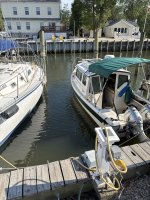
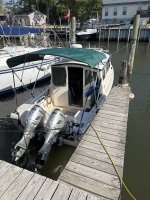
I have a scenario that I never thought of before. I am tied fore and aft btwn two poles that are almost further apart that my boat is long. I have no boats up wind as those slips are empty. The wind is always from starboard and is almost always brisk. To port is a 34 foot Hunter sailboat that I really don’t care to hit. I can’t figure out a way to single-handedly leave my slip because as soon as I untie my boat it slides sideways towards the Hunter. I was going to tie a dock line to the post in front of me and to the post behind me and run them to the cleat outside the helm window. That might work, but then what do I do when I come in later at night when the wind is really kicking. I’m in a spot, That’s for sure, a spot. What would you do to come and go?. When the wife is aboard She is a big help. I used to have a Sailboat here and the wind was never an Issue. The open deck of the sailboat allowed me to grab the lines easily as I pulled into the slip but with the Dory I’m inside the cabin and can’t redact quickly enough. The neighbor told me to just use the motors and steer with the shifters while the motors are straight. But it’s too much to manage with these slow cable drive shifters. It’ll be fun to hear how you might approach these issues and might provide a good natured chuckle for us all.
 

Attachments
  • image.jpg
    image.jpg
    2.8 MB · Views: 34
  • image.jpg
    image.jpg
    2.9 MB · Views: 34
Last edited:
I always warm up both of my motors, then walk the boat to the end of the slip before stepping aboard. From your position of stern-in, you could then use your throttles to turn the boat in the desired direction of travel.
 
Can’t walk the boat and be at the helm at the same time. And the finger pier is only 8 or 10’ long. Only comes as far out as the cabin. With the winds pushing me to port I’ll be on the sailboat by the time I walk from the dock to the helm.
It amazes me how long it takes for the heavy boats to move in the wind.
 
I’d certainly CYA with some fenders on the expensive side, both coming and going. And have a shove-off (/mooring) stick at ready.

Approach stern to the elements so the momentum of the bow swinging into them buys you extra time to tuck in and hook a line. Going with the elements is bad. Going into the elements bow first can also be tricky, as the bow is already swinging into the other boat from the momentum of its own turn. Slow is pro, yes, but speed at the right time gets you into the slip where the elements should be less. Practice. Don’t take the easy sides of docks when given a choice. How would you do this solo? With crew? What would it look like if it were easy? How can I automate that?

Depending on the distances between the stubby piling and your helm window, and also your propeller clearance from the start of the slip, a spring line type ready-made or endless/ whole line loop are most likely in your future. Don’t let the bow drift and get you on an angle in that slip. (Say it again- don’t lose the bow). I would try a line secured to both my stern cleat and my midship cleat, in a big loop of sorts, and toss or hook that over the stubby piling. Have a hook ready as backup if not used, you may have a couple seconds for a mulligan. Have fenders ready this side also, and once you hook the stubby piling, if you size it up first before untying one day, it should hold the stern and midship to the dock with enough space behind to have a minimal reverse throttle, props pointing to port, assisting the midship cleat with bow containment. Then tie properly before turning motors off; adjust after..

For departing, I’d have to see your front piling (tall one) options (like a lock wall) but otherwise having your lines able to slip off cleats by themselves with supervision rather than direct intervention (not into the water, either), is helpful. Hook one horn with a loose untied line, etc.. Speed is also helpful in the right dose (the dose makes the poison, right?) Outboards need a little rev higher to get a pilothouse boat moving, then back to your clicks, if just clicking into gear isnt getting the results in time (but don’t be a revver guy).

Can likely use your twins one forward one reverse or to help punctuate this also, but I have no insight into that personally. But I do dock on a short dock float with strong currents and decent winds and some fetch, and have spent heaps of time practicing spring line variants. The game slows down eventually and you can walk to the cockpit.

Remember your fenders on the expensive side, or take a nap. It’s better to be in wishing you were out, than out wishing you were in :)
 
I would put a cleat along the dock a little forward of the helm side window. When departing I'd use a loose line looped around the cleat (i.e. holding both ends). When departing I would use this line and the motors to keep the boat straight as I left the dock. When far enough out, release one end of the line, let it pull past the cleat, and recover through the window. When coming in, I'd have a line or a boat hook ready at the helm to grab this cleat when backing in.
 
Especialy with twins, I would consider putting a set of shifters in the cockpit on the aft cabin bulkhead. If you had an auto pilot, you could have a manual remote to "steer" the boat, or differential speeds/gear in the twins to "steer" the boat.
 
Tie your boat to the dock with thin ropes that break when you take off. Then go to the helm and go for it
 
After a very long complex drafted post, I decided I’d rather come to your dock and show you some stuff! 🤣 As a sailor, you have that knowledge advantage, which is great. Dave and ssobol are both on good tracks. Drink their koolaid. Rigging loops and/or rigging to slip are great methods. Holding / hovering “stern-to” prevailing forces (I call it weathervaning) is a key skill easily mastered in a twin engine powerboat and once acquired, you can then graduate to “ferrying.” When stern-to, in close quarters the wind can actually be your friend.

But my super easy answer is to simply stop avoiding the Hunter. Instead, embrace the Hunter wholeheartedly. Talk to the Hunter owner first and seek his buy-in. Explain the undesired alternative! Then just rig 3-4 full round (norweigan) bouys (Polyform A-3 or A-4) as fenders on your port and simply roll on by on your way out. As you turn to port, the back half of your boat will be opening from the Hunter anyways. For docking, back to wind and swing your port quarter (bouy) onto the Hunter then roll down and stop your boat while blown down on him. Toss lines or use boat hook upwind to get purchase on your pilings or new cleats you should add to dock😉 then pull your boat off the Hunter to final mooring tuning.
Yes, the bouy-to-be-fenders will cost you, but peace of mind is priceless.

I would also rig fixed loops to stay around your pilings (if not there already) with pulleys/blocks on them and simply pass your dock line through - then back to boat: “doubled-up” and rigged to slip. Or better yet, put cleats on the dock - still doubled & rigged to slip prior to departure. I’ve always preferred working lines from the boat and NOT the dock anyways. Cowboy up - be a line wrangler!

These are merely the ramblings of a uscg small boat coxswain; your actual mileage may vary.
 
I’d certainly CYA with some fenders on the expensive side, both coming and going. And have a shove-off (/mooring) stick at ready.

Approach stern to the elements so the momentum of the bow swinging into them buys you extra time to tuck in and hook a line. Going with the elements is bad. Going into the elements bow first can also be tricky, as the bow is already swinging into the other boat from the momentum of its own turn. Slow is pro, yes, but speed at the right time gets you into the slip where the elements should be less. Practice. Don’t take the easy sides of docks when given a choice. How would you do this solo? With crew? What would it look like if it were easy? How can I automate that?

Depending on the distances between the stubby piling and your helm window, and also your propeller clearance from the start of the slip, a spring line type ready-made or endless/ whole line loop are most likely in your future. Don’t let the bow drift and get you on an angle in that slip. (Say it again- don’t lose the bow). I would try a line secured to both my stern cleat and my midship cleat, in a big loop of sorts, and toss or hook that over the stubby piling. Have a hook ready as backup if not used, you may have a couple seconds for a mulligan. Have fenders ready this side also, and once you hook the stubby piling, if you size it up first before untying one day, it should hold the stern and midship to the dock with enough space behind to have a minimal reverse throttle, props pointing to port, assisting the midship cleat with bow containment. Then tie properly before turning motors off; adjust after..

For departing, I’d have to see your front piling (tall one) options (like a lock wall) but otherwise having your lines able to slip off cleats by themselves with supervision rather than direct intervention (not into the water, either), is helpful. Hook one horn with a loose untied line, etc.. Speed is also helpful in the right dose (the dose makes the poison, right?) Outboards need a little rev higher to get a pilothouse boat moving, then back to your clicks, if just clicking into gear isnt getting the results in time (but don’t be a revver guy).

Can likely use your twins one forward one reverse or to help punctuate this also, but I have no insight into that personally. But I do dock on a short dock float with strong currents and decent winds and some fetch, and have spent heaps of time practicing spring line variants. The game slows down eventually and you can walk to the cockpit.

Remember your fenders on the expensive side, or take a nap. It’s better to be in wishing you were out, than out wishing you were in :)
Well said that last Sentence, "wishing we were in". So true! Long lines from pole to pole and short mid-ship spring lines are in order soon. Also part of the problem is speed. With engines merely Idling the boat still comes in too fast. We will get it down.
 
I would put a cleat along the dock a little forward of the helm side window. When departing I'd use a loose line looped around the cleat (i.e. holding both ends). When departing I would use this line and the motors to keep the boat straight as I left the dock. When far enough out, release one end of the line, let it pull past the cleat, and recover through the window. When coming in, I'd have a line or a boat hook ready at the helm to grab this cleat when backing in.
We do use that but the finger pier only goes to about the rear cabin bulkhead ... not much to work with. A Long tight line will maybe help.
 
After a very long complex drafted post, I decided I’d rather come to your dock and show you some stuff! 🤣 As a sailor, you have that knowledge advantage, which is great. Dave and ssobol are both on good tracks. Drink their koolaid. Rigging loops and/or rigging to slip are great methods. Holding / hovering “stern-to” prevailing forces (I call it weathervaning) is a key skill easily mastered in a twin engine powerboat and once acquired, you can then graduate to “ferrying.” When stern-to, in close quarters the wind can actually be your friend.

But my super easy answer is to simply stop avoiding the Hunter. Instead, embrace the Hunter wholeheartedly. Talk to the Hunter owner first and seek his buy-in. Explain the undesired alternative! Then just rig 3-4 full round (norweigan) bouys (Polyform A-3 or A-4) as fenders on your port and simply roll on by on your way out. As you turn to port, the back half of your boat will be opening from the Hunter anyways. For docking, back to wind and swing your port quarter (bouy) onto the Hunter then roll down and stop your boat while blown down on him. Toss lines or use boat hook upwind to get purchase on your pilings or new cleats you should add to dock😉 then pull your boat off the Hunter to final mooring tuning.

Yes, the bouy-to-be-fenders will cost you, but peace of mind is priceless.

I would also rig fixed loops to stay around your pilings (if not there already) with pulleys/blocks on them and simply pass your dock line through - then back to boat: “doubled-up” and rigged to slip. Or better yet, put cleats on the dock - still doubled & rigged to slip prior to departure. I’ve always preferred working lines from the boat and NOT the dock anyways. Cowboy up - be a line wrangler!

These are merely the ramblings of a uscg small boat coxswain; your actual mileage may vary.
KC that is what I'll be doing. The sailboat is in my slip. I'm not to make any changes to the lines in the slip that you see me in because they are Set for the Hydra 25 that owns the slip. The sailboat was sold weeks ago and is leaving for Brooklyn NY as soon as there is enough water available. He made the mistake of coming to our marina last fall when he was for sale and the water was high. Normal draft for the sailboat is 5' and normal water depth is 4.5'. So the boat is resting on the bottom in muck most of the time and the owner (the new owner) is waiting for the famous Barnegat south wind to fill the marina to overfull so he can get out. Where he is at the lift can't even reach him.
Until I wrote this article I had been under the impression that it is not proper to utilize or rub on poles or guide ropes in btwn poles. Then I spent the last two weeks watching boats in many local marinas and also talking to owners and they all said to me that I paid for those poles to be there... why not use them. I see some of my Neighbors boats, 2-3 million dollar boats, rubing all the way in. Once I'm into my correct slip permanently I will rig the slip with key lines and extra fenders to last the year out. The marinas around me, and my Marina are just filling up finally and it won't be long now untilI have some neighbors to block some of the wind.
Thanks everyone!
 
Last edited:
You might look into putting a line between the dock and the pole that separates the slips (port side of the C-Dory in the pictures). This gives you something to grab onto on that side of the boat. If the line is low enough, it can provide a catch to the hull to keep it from going too far to port (and into the sail boat). I've seen plenty of slips with lines separating adjacent berths. You might also see about putting padding on the two poles at the entrance to your slip, you could then use them as pivot points when entering and leaving the slip. A hanging grab line on each pole might also be handy.
 
Sobol, In a word: Yes. It is common in our marina to have those ropes. And that is what I’ll be doing once I’m in my own slip. This has been a frustrating time waiting for this sailboat to leave. It’ll be a fun season.
 
We are in a shared slip with about three feet between our boats. This is why I walk our boat half way out of the slip before stepping aboard. 20260111_102735.jpg
 
Back
Top