
Search results
-
L
Getting Fuel Tank Tested
Fillet in. 5:1 traditional with fumed silica to a stiff consistency like cold peanut butter. 1’’ radius.- LuckeCatanias
- Post #27
- Forum: Fuel Systems
-
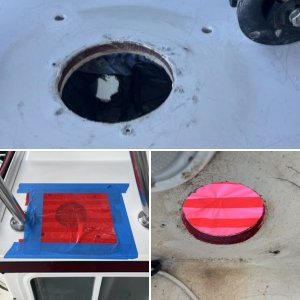
Projects 2025
Project documentation for Pearl- LuckeCatanias
- Album
- Comments: 0
- Category: Our C-Dory Albums
-
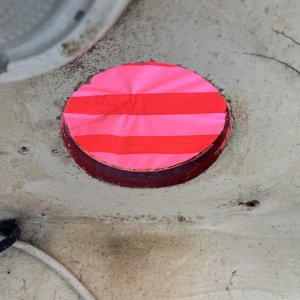
IMG_1692.jpeg
Routered out balsa at the vent penetration and filled with Total Boat structural filler.- LuckeCatanias
- Media item
- Comments: 0
- Album: Projects 2025
- Category: Our C-Dory Albums
-
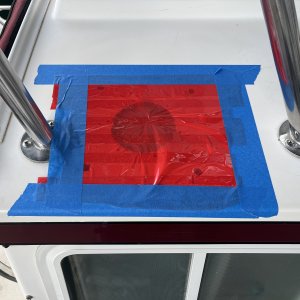
IMG_1691.jpeg
Filler curing with protective masking.- LuckeCatanias
- Media item
- Comments: 0
- Album: Projects 2025
- Category: Our C-Dory Albums
-
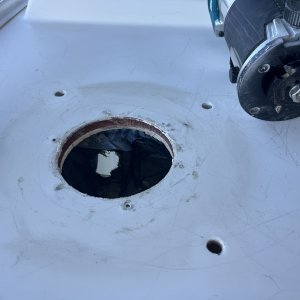
IMG_1690.jpeg
With old vent removed. Over drilling old fastener holes. Coming back with penetrating epoxy followed by potting with structural putty.- LuckeCatanias
- Media item
- Comments: 0
- Album: Projects 2025
- Category: Our C-Dory Albums
-
L
Getting Fuel Tank Tested
No - I think you’re reading the ply map backward? First layer, directly against the Coosa, is mat. Cut to the same profile as the Coosa. Then: 6 oz bi 23 tri 6 bi 23 tri Are you saying that you'd start with your largest piece being the mat? I could see that making sense if you think that...- LuckeCatanias
- Post #24
- Forum: Fuel Systems
-
L
Getting Fuel Tank Tested
Coosa just epoxied in. The sticks are wedged in from the aft battery compartment divider to provide clamp up.- LuckeCatanias
- Post #22
- Forum: Fuel Systems
-
L
Getting Fuel Tank Tested
I 3D modeled the tank to think about how to do my spacers for the bottom of the tank. I think my solution will be to reinforced epoxy in a series of hdpe rails to the bottom of the hull. I’ll rip 1/2 inch thick 1 inch wide strips with a 1/8 inch groove cut into the the periphery of the 1/2 inch...- LuckeCatanias
- Post #21
- Forum: Fuel Systems
-
L
Getting Fuel Tank Tested
Glass ply map. Base is lightweight mat to get flush to existing surface followed by alternating layers of biaxial and triaxial with 1/2 inch stepovers. I think I’ll overcoat the periphery of the finished layup with a good coating of gflex to guard against any disbond cracking/water intrusion?- LuckeCatanias
- Post #20
- Forum: Fuel Systems
-
L
Getting Fuel Tank Tested
Pattern for COOSA core replacement. Made by cutting the largest rectangle of ply that can fit in the cutout then using a hot glue gun to place tabs that follow the contours of the cutout. This pattern then gets placed on the coosa stock and the tabs are sort of « connect the dots » to define to...- LuckeCatanias
- Post #17
- Forum: Fuel Systems
-
L
Getting Fuel Tank Tested
Sanding prep to remove the thick layer of Gelcoat at the aft cabin bulkhead.- LuckeCatanias
- Post #16
- Forum: Fuel Systems
-
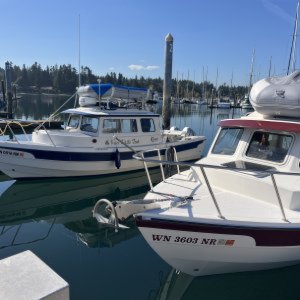
Fall 2025
- LuckeCatanias
- Album
- Comments: 0
- Category: Cruises and Events
-
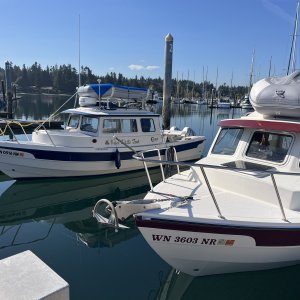
Kingston
- LuckeCatanias
- Media item
- Comments: 0
- Album: Fall 2025
- Category: Cruises and Events
-
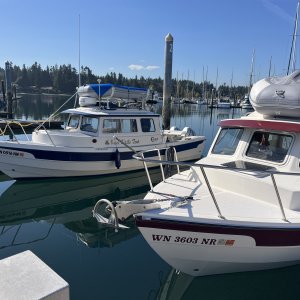
Kingston
- LuckeCatanias
- Media item
- Comments: 0
- Album: Fall 2025
- Category: Burgee and Patches
-
L
Getting Fuel Tank Tested
Thanks Bob! Yes, that seems all correct. I'll restate for clarity: Photo 1 Photo of Fuel Tank bilge area looking AFT. The two rectangular cutouts on the bottom/hull at the aft end next to the bilge bulkhead are where (2) pieces of wooden 2x4 were glassed in to prevent movement of the tank...- LuckeCatanias
- Post #15
- Forum: Fuel Systems
-
L
Getting Fuel Tank Tested
UPDATE: After pulling the tank I took a look at the AFT surface of the AFT cabin bulkhead. In my boat there is a 8 or 10 inch high section of built up bulkhead down in the bottom of the bilge. This is a glass (mat)-balsa(1/2")-glass(mat) layup. It tapers out to nothing at the level of the...- LuckeCatanias
- Post #13
- Forum: Fuel Systems
-
L
Getting Fuel Tank Tested
Photo of found the two holes I found after pressure washing the bottom the tank. Tank out of the boat.- LuckeCatanias
- Post #11
- Forum: Fuel Systems
-
L
Getting Fuel Tank Tested
UPDATE: Tank came out of the boat yesterday. After pressure washing the bottom of the tank many holes appeared -- the pressure washer was able to punch two 0.350" holes in the bottom of the tank. Meaning that thing was just about to let go if not already -- I was likely leaking fuel or at the...- LuckeCatanias
- Post #9
- Forum: Fuel Systems
-
L
Getting Fuel Tank Tested
Update -- I pulled up the sole to pressure wash the area in prep for service/pressure test and found quite deep corrosion on the exterior aft vertical wall of the tank. About half way up the wall and maybe 10 inches port off the center line if anyone is keeping notes. I'd estimate the depth of...- LuckeCatanias
- Post #7
- Forum: Fuel Systems