Double-checking My Planned but Minimal Battery Upgrade

DaveInRI

Member
Joined
Aug 5, 2024
Messages
134
Reaction score
18
Location
Narragansett Bay
C Dory Year
2005
C Dory Model
22 Cruiser
Hull Identification Number
CDO22275K405
Vessel Name
Once
I'm replacing my 6hp gas kicker with an EP Carry electric outboard, ordered just yestearday. This is basically a 270W highly efficient motor (motor/gear/prop/no seals = efficiency max), which matches a Torqueedo 603 in terms of propulsive power but using half the energy to do so, and with all the range you can choose to pay for.

My new-to-me 2005 22 Cruiser has 2005 electronics (VHF, Chartplotter, and fish/depth) which I'm replacing this spring. All 12V, and I don't want to run new wiring apart from the battery end and new electronics connectors, so I'll use a 12V lithium house battery. I'll keep the lead acid starter battery, but isolate it except for starting purposes-- the alternator will go to the house battery w/ an intermediary like an Orion in between to preserve battery and alternator. I'd then use a DC-DC connector to occasionally top-off the lead acid, if it needs it between trickle charges at home. The large 12V house battery will also have an MPPT that will be used to charge my EP Carry's portable dinghy battery when I get back to the CDory (it can also be charged at home). I am not addressing on-board inverters, solar, or shore power now, none of which are presently hooked-up or 2026 projects.

Does anyone see anything wrong with this? I'm going for 80/20 least in/most out in terms of weight savings and amp hours gained. I'd have off switches and fuses in the right requirements and locations.

Three batteries:
  1. Lead acid starter — one job only, starts the Honda. Completely isolated from the alternator and from the rest of the system. Kept healthy via occasional top-up from the house bank and a trickle charger at the home dock/driveway. Cheap and tested.
  2. 12V lithium house bank — powers everything aboard: lights, electronics, bilge pump, and the EP Carry kicker via the add'l 12V booster and cord I bought from EP Carry. The booster steps up to 24V with what I figure is 90% efficiency, which is acceptable to me in this use case. No loss of propulsive power per EP Carry (Could also use 36V).
  3. 24V lithium dinghy battery — dedicated to the dinghy when using the EP Carry on it (no booster required; native 24, have cord from EP Carry for this, too). Leaves the boat every time the dinghy does, plugs back in on return to recharge (or just taken into my house and plugged in). Could be used as backup for the CDory (kicker, batteries). Can use this to solar-charge the house bank down the road, too.

Charging:
  • Alternator → intermediary to not fry alternator or lithium (TBD, if possible: external regulator?) → 12V lithium house bank. The BF90 dedicates approximately 30A to charging with the remainder powering the motor itself (44 total, IIRC)
  • 12V house bank → small DC-DC charger → lead acid starter. Occasional top-up as needed, or trickle at home
  • 12V house bank → eg Sol Buck Boost MPPT (recommended by EP Carry)→ 24V dinghy battery on return. Either the 10A cigarette plug version for simplicity, or the 20A hardwired version for faster charging.

Weight wise, I'm going from a 55lb Suzuki 6hp (excluding gas) to a 14lb EP Carry, so with cord call it 15, so net savings of 30lbs before battery. A 100Ah 12V lithium is around 25lbs quick math, so I'd only be saving 5 pounds overall with that, plus the loss of the house battery presently there, probably 35+ pounds, so call it a 40 pounds net savings off the stern. I'd then add a 6-15lb dinghy battery (TBD), call it 10lbs, so 30lbs net savings off the stern. Not a whole lot with these estimates, but it might be more in real life. But, I gain a lot more amp hours on the house battery and the ability to run the EP Carry all the time and have it charge by the Honda. My battery switch is broken anyway (can't turn it without pliers; seller gave me a set) so I need to mess around back there anyways, and update the electronics. So this is all a big improvement, but not a conversion or build-out. I just would like a second set of eyes to say "yep that would work fine" or "don't mix chemistries even with a DC/DC / forget a shunt / balancer / BMS" etc or you'll catch on fire etc.. I'm learning, but keenly aware I don't know what I don't know.

Thanks, All.
 
Last edited:
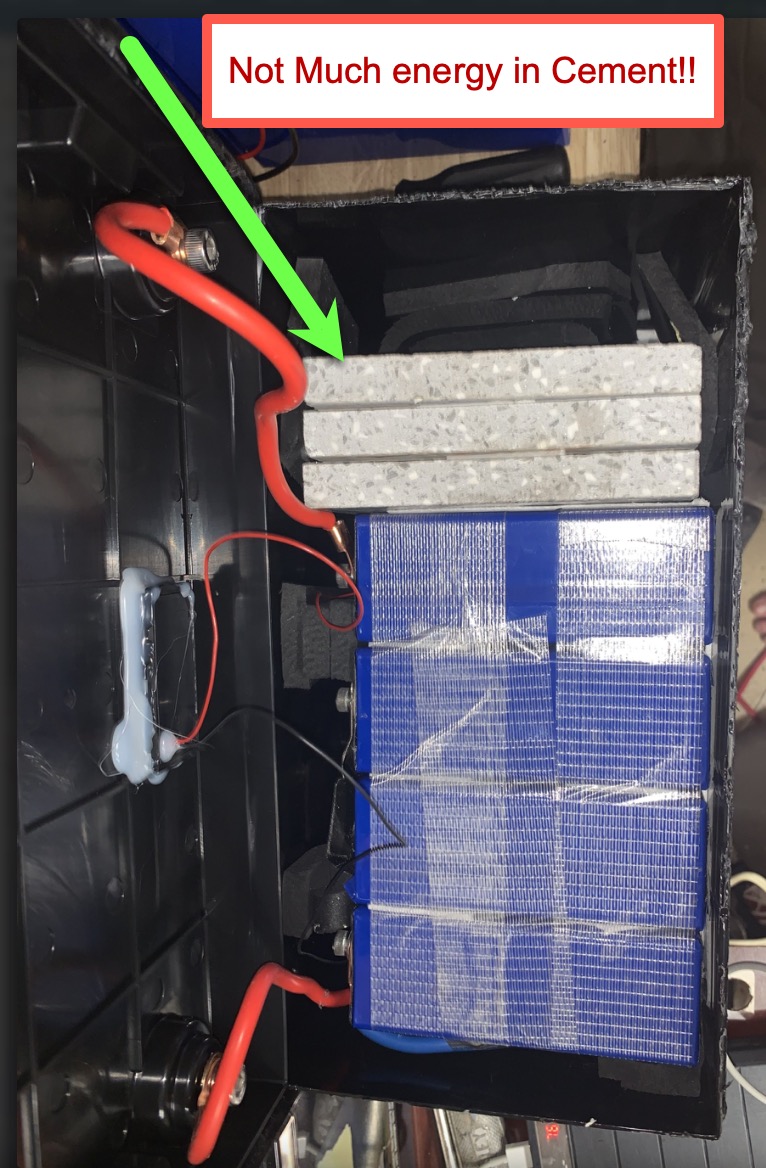
Lost the edit window...

In case it comes up, the idea behind this was minimizing mixing of battery chemistry (and states of charge between lithium), and to not have the EP Carry, drawing off the house battery, then over-draw itself from the starter lead battery, which can't be kept up with via the Honda's alternator.

I also wanted to avoid shunts and bus bars and other "yeah that'd be cool" things which for my long weekends and plug-in / check everything over at home, seemed not necessary. I also didn't want to just add a new large onboard CDory lithium 24V battery for the EP Carry, and then also a charger from the lead acid, which would have been smaller and drawn down etc.. Figured I could use the Honda to add back the half hour of use twice each trip to that, and the starter is basically fine for a long time without even being topped off.
 
I upgraded a bunch of my electrical system last year and switch my house bank to LiFePo4. Don’t go thinking I know what I’m talking about but here’s a couple things for you to research. ( I did notice you were not able to keep the EP Carry in your cart for very long so I wanted to respond quickly)

Why not keep the alternator to the start battery? It would be a much simpler install and probably a better charge profile for your house bank.
You already would need a dc-dc charger, that would be most likely easier on your alternator also.
in my case I did notice that the charge start within second of starting the engines so you would not be loosing much charge time on your house bank. That would be also one less thing that could go wrong and affect you start battery and the restart of your engine.
I’m sure others will pitch in with real knowledge.
 
I agree with Stephan, connect the alternator to the start battery as well as the dc-dc charger for the house battery. I see no downside to this and keeping a trickle charger on the start battery at home won't be so critical. I know that I would forget to connect the trickle charger now and then after getting home.
 
I just purchased an EP carry for my 22' cruiser to help me with docking. I will also be running it from my 12V LiPO4 house battery. First test will be tomorrow. You did not mention, BUT IT IS ABSOLUTELY NECESSARY to also purchase a 12-24V DC-DC converter if you are doing that. Joe Grez, the owner and designer of EP carry (and a friend of mine), sells one for $100 but you may be able to find one that is less expensive on-line. However, the output on the 24V side needs to be at least 20A, and most of the ones I have seen on Amazon don't go that high, and even if they do, the wires coming in and out are not adequately sized. You will also need to use heavy duty wires (at least 10guage) and a 40A fuse. Finally, you will need a switch or disconnect between the battery and the Dc-DC converter so it's on only when using the motor. I suspect, but don't know for sure, that there is a small current drain through the converter even when not in use.
 
Tom is right, at least for the model I use, there is a small draw from the dc-dc charger. I connected mine on the engine side of the switch, so when the switch is off, it disconnect the start battery from the charger, no more draw.
 
I just found an interesting website that describes the problems with purchasing LiFePO4 batteries from China. Hope it helps some of you as you search for those batteries.

Also, I can't seem to figure out how to start a new thread in this new version of our website.
 
I did notice you were not able to keep the EP Carry in your cart for very long so I wanted to respond quickly)

:) well, once I recognized there’s nothing like it on the market, noise or otherwise, as well suited for what I wanted to do, and that I’d be “stuck” with a 4stroke as backup without it, I knew I had to act fast. Plus, they sell out each spring and I didn’t want to miss out. I spent way too much time trying to find a more elegant solution, but couldn’t. If it works as reviewed and described, I might try and sell the darn things in RI as a side hustle, ha
 
Tom, How are you going to use the EP carry in docking?

Thank you for bringing the Marine How to it article to our attention. The site owner Rod “RC” Collins had a catastrophic stroke in 2021, and is completely paralized on the left side. It is good to see him post newer articles, although it is not clear how long he is going to keep up the site and do testing, plus run the store. Rod has always researched issues very well, and has carried top of the line equiptment on his virtual store site in conjunction with Amazon.

As to how to start a new topic: Click on "Fourms" second from the right upper on the menue bar. That will bring up the various forums. Just click on the Forum you want your new thread to appear in. Then you will see your avitar at the head of the list of that forum, and the window after your avitar, will say"Thread Title"--put the title in place, and then start the post in the box below.

Dave, I hope you are not depending the electric motor to push your C Dory more than a short distance, at a low speed, if you loose the main. It cannot take the place of a gasoline kicker/get home motor. We used our Torqeedo for very short distances, but kept the gas 3.5 hp outboard on board and ready to use in case we needed prolonged "get home" power.

I have always pulled the charging off the engine starting battery. The windlass should be on the engine start battery and the engine running when using the windlass.
 
Well, it was the plan(/hope), and why I went with this one over any of the others. I’m going to test it first before selling the 6hp, but it should get me 3+ knots (and a few hours of runtime) at full power (many more at half power) in fair weather no current on the 22, using a 100Ah 12v house battery.

If, in my trials with a portable dinghy battery (likely 20Ah 24v, so I can explore with it more than the 11.8Ah they offer), it does the job [on the 22] satisfactorily in worse-than-fair conditions but at reduced time, I can size the new house appropriately.

If it is like your story of being in the dinghy behind the sailboat’s lee unable to get back, and I can’t tack the 22 or move through the wind to get where I want to go, then the experiment was also successful just bad for my non-gas kicker goals.

I don’t have high hopes for it but it might get me to a trade off decision. If it fails for my inflatable four-up dinghy in a mooring field in an afternoon breeze, then I’ll just use it for calmer conditions and am back to hoisting a replacement 6hp between boats. (I kinda want one anyway so I can plane around on the river, so all won’t be lost.) We do have 20 solid minutes of no-wake zone between us and the ocean, so it’d be good to have for that, too (especially if going with the current), even for exhaust fumes alone (often on the way home due to prevailing winds they all get blown back into the cockpit and make my wife and kids go inside; probably good for CO anyways in that situation).
 
Thank you for bringing the Marine How to it article to our attention. The site owner Rod “RC” Collins had a catastrophic stroke in 2021, and is completely paralized on the left side. It is good to see him post newer articles, although it is not clear how long he is going to keep up the site and do testing, plus run the store. Rod has always researched issues very well, and has carried top of the line equiptment on his virtual store site in conjunction with Amazon.

I found one of RC's articles showing a bait-and-switch warning about the ecosystem Will Prowse operates in (note, he does encourage people to watch his videos, it's not an issue caused by Will), in that these manufacturers will send him a good battery with superior internals for review, then ship out pouch batteries to customers instead.


The excerpt:
Budget batteries a moving target;

Our budget battery recommendation has changed a few times. We first started with Ampertime /Li Time but the lack of a Bluetooth BMS had me fielding too many questions about random batteries disconnecting at voltages well below 14.4V. With no way to see individual cell voltages we bought/tested some Chins batteries that had a BT BMS. Then, I discovered Chins made a move to “Pouch cells” and away from prismatic cells and never told anyone. This is what I call the old “Bait & switch”. They send Will Prowse a prismatic cell battery, which got a decent review, then ship pouch cell batteries after the review has been completed.. Pouch cells can be fine provided they are assembled correctly. On the budget end of the spectrum “correctly” is rare. Until I see pouch cells done correctly we will not be recommending any pouch cell batteries on MHT… I rest my case with the image below.. Buyer beware with Pouch cell batteries.

----

Related in the same article, he also writes, bolding mine:

"Please note we are no longer and will never again recommend any LFP battery that does not have a Bluetooth BMS so you can see what’s going on inside.."
 
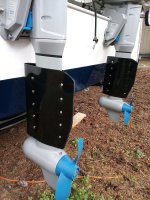
Bob, I want to use the EP carry in docking in the hope that I have better control standing in the cockpit with throttle and tiller in hand. I find that trying to dock from the helm station is hard. I can't see the dock well when I dock on the port side (my preferred) and have very little control using the motors at slow speeds. Also, the epropulsion throttles are tight and I don't have much fine control. At present I need someone else on board if I want to dock. With the EP carry I may be able to go out by myself. I have added rudders to the motor shafts, and that helps some with the control at slow speeds, but doesn't solve the problem of going alone.

With regards to the EP carry: Joe Grez has found an financial backer and is expanding production. He hopes to be able to ship a motor as soon as an order comes in and hopefully be able to provide stock in some stores.

The EP carry is rated for 240 watts, so according to my calculations I may be able to get about 3mph which should be enough for docking. I will be testing it today so I will find out if my calculations are correct.

rudder.jpg
 
Bob, I want to use the EP carry in docking in the hope that I have better control standing in the cockpit with throttle and tiller in hand. I find that trying to dock from the helm station is hard. I can't see the dock well when I dock on the port side (my preferred) and have very little control using the motors at slow speeds. Also, the epropulsion throttles are tight and I don't have much fine control. At present I need someone else on board if I want to dock. With the EP carry I may be able to go out by myself. I have added rudders to the motor shafts, and that helps some with the control at slow speeds, but doesn't solve the problem of going alone.

With regards to the EP carry: Joe Grez has found an financial backer and is expanding production. He hopes to be able to ship a motor as soon as an order comes in and hopefully be able to provide stock in some stores.

The EP carry is rated for 240 watts, so according to my calculations I may be able to get about 3mph which should be enough for docking. I will be testing it today so I will find out if my calculations are correct.

View attachment 130259
Do you have the two Navy motors with separate throttles like traditional gas "twins"? Are you able to rotate in place (zero turn mower / tank)? With all the electricity on board, maybe you could add an electric bow thruster (could just be a spot lock type trolling motor clamped on the bow rail as proof of concept)? Where will you be mounting the EP Carry? I read that many of the electrics had poor reverse performance, and is really just a brake. Perhaps you could add a fin / Permatrim / anti-ventilation plate onto your rudder setup (would be interesting to see the effects).
 
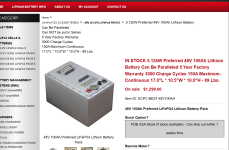
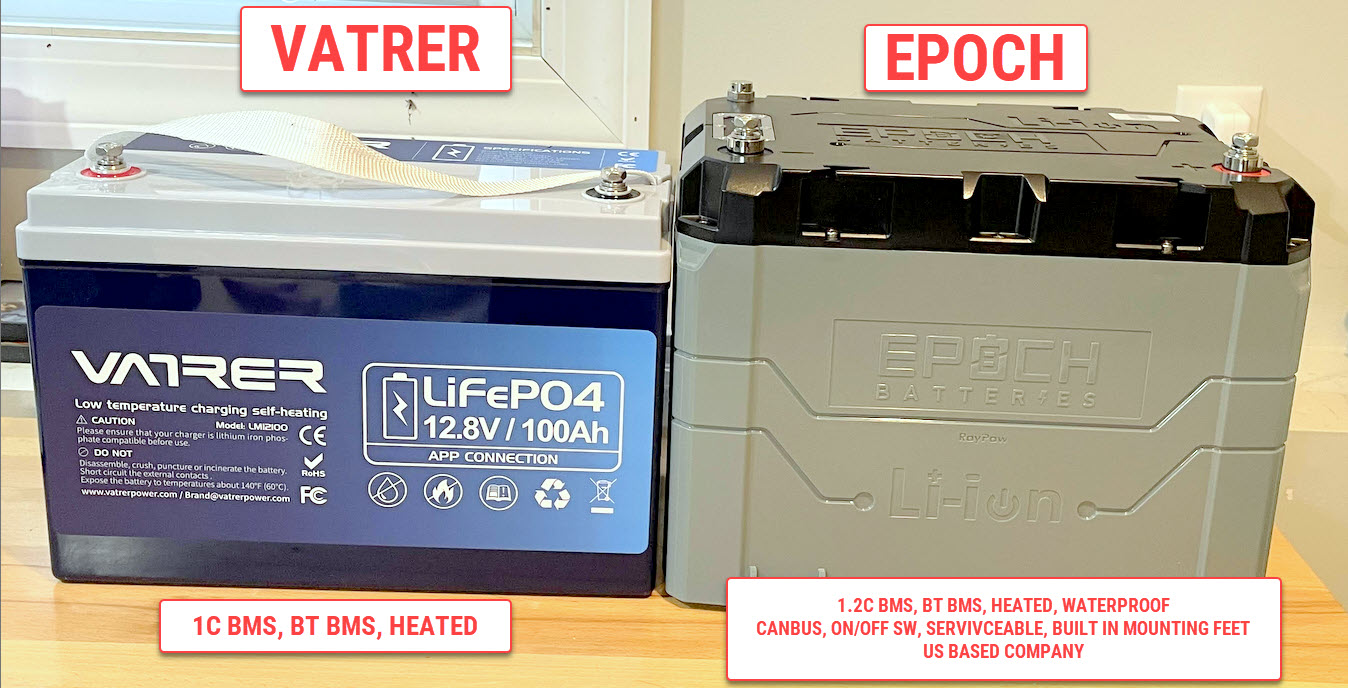
On the subject of lithium FePO4 batteries. I agree that the epoch brand is top notch but pricey. I decided to go with the Bestgo brand that is less expensive but seems to be of a good quality. As far as I know the only US dealer is the "Electric Car Parts Company" https://www.electriccarpartscompany.com/ . Their web site has a lot of information about Bestgo and how they are manufactured. I have been a customer of theirs ever since I built an electric car 20 years ago.
The case is aluminum and has an EP66 waterproof rating. It has a Daly BMS and bluetooth.

1776011113924.pngP1030164.JPG
 
Dave,
I do have two throttles that can be used independently or slaved to only one. The motors however only have a 10" movement from right to left and my cable steering only allows about 9.5 inches. The epropulsion motor have good reverse performance, but like I said the throttles are very stiff and the factory says there is no way to fix that!
I am putting the EP carry between the other two motors. The epropulsion motors are small and I have 22" between them.

Since my maximum speed is only 6mph I don't think permatrim or fins would be any help. The HDPE rudders will turn the boat even when the motors are stopped.
at NMI 4.jpg
 
Dave,
I do have two throttles that can be used independently or slaved to only one. The motors however only have a 10" movement from right to left and my cable steering only allows about 9.5 inches. The epropulsion motor have good reverse performance, but like I said the throttles are very stiff and the factory says there is no way to fix that!
I am putting the EP carry between the other two motors. The epropulsion motors are small and I have 22" between them.

Since my maximum speed is only 6mph I don't think permatrim or fins would be any help. The HDPE rudders will turn the boat even when the motors are stopped.
View attachment 130262
My thought about the foil was more as anti-ventilation in reverse-- like an off label use-- not their traditional purpose. But, glad you have good reverse.

Can you move the Navy's further apart? Without doing the math, that might not help enough anyways.

Is there a push button throttle option for throttles, like the Remigo remote?

And, it's always good to brush up on your spring line-type magic tricks and using loops-on-hooks passed to dock cleats from the helm pre-tied to cleats on the boat, plus really getting the boat in balance, how to transit etc with the elements before you start. I generally only have one side of a 15' dock available, on a strong tidal current river that's also shallow and with wind fetch, so it took me a long time head scratching how to pull bow-in every time (too shallow at low tide to back in or overshoot it bow-in, and big corner pilings at all four points on the float) without being double-blasted by wind and current off the dock. I really enjoyed the trial and errors, and now feel like I have carnie tricks. Lots of old solo sailor methods to look into... and don't discount a good paddle for flat water and boat ramps :)
 
Last edited:
Tom, How are you going to use the EP carry in docking?

Thank you for bringing the Marine How to it article to our attention. The site owner Rod “RC” Collins had a catastrophic stroke in 2021, and is completely paralized on the left side. It is good to see him post newer articles, although it is not clear how long he is going to keep up the site and do testing, plus run the store. Rod has always researched issues very well, and has carried top of the line equiptment on his virtual store site in conjunction with Amazon.

As to how to start a new topic: Click on "Fourms" second from the right upper on the menue bar. That will bring up the various forums. Just click on the Forum you want your new thread to appear in. Then you will see your avitar at the head of the list of that forum, and the window after your avitar, will say"Thread Title"--put the title in place, and then start the post in the box below.

Dave, I hope you are not depending the electric motor to push your C Dory more than a short distance, at a low speed, if you loose the main. It cannot take the place of a gasoline kicker/get home motor. We used our Torqeedo for very short distances, but kept the gas 3.5 hp outboard on board and ready to use in case we needed prolonged "get home" power.

I have always pulled the charging off the engine starting battery. The windlass should be on the engine start battery and the engine running when using the windlass.
Not to hijack the thread… Bob could you give a little more insight on your preference to wire the windless to the start battery. I have 2-100 amp lithium house batteries and 1-85 amp start battery. Presently the windless is wired to the house bank. Thanks, Ken
 
Back
Top